

Flexible architecture
Stytch is architected to be embedded directly into your application, offering you flexibility and control over your integration and creating a seamless and native experience for users. Most customers mix-and-match approaches to fit their needs:Headless frontend integrations
Your client invokes Stytch’s headless frontend SDKs, which handles things like client-side session management.
Backend integrations
Entirely server-side integration, where your backend calls Stytch’s API through our backend SDK.
Using the frontend SDK
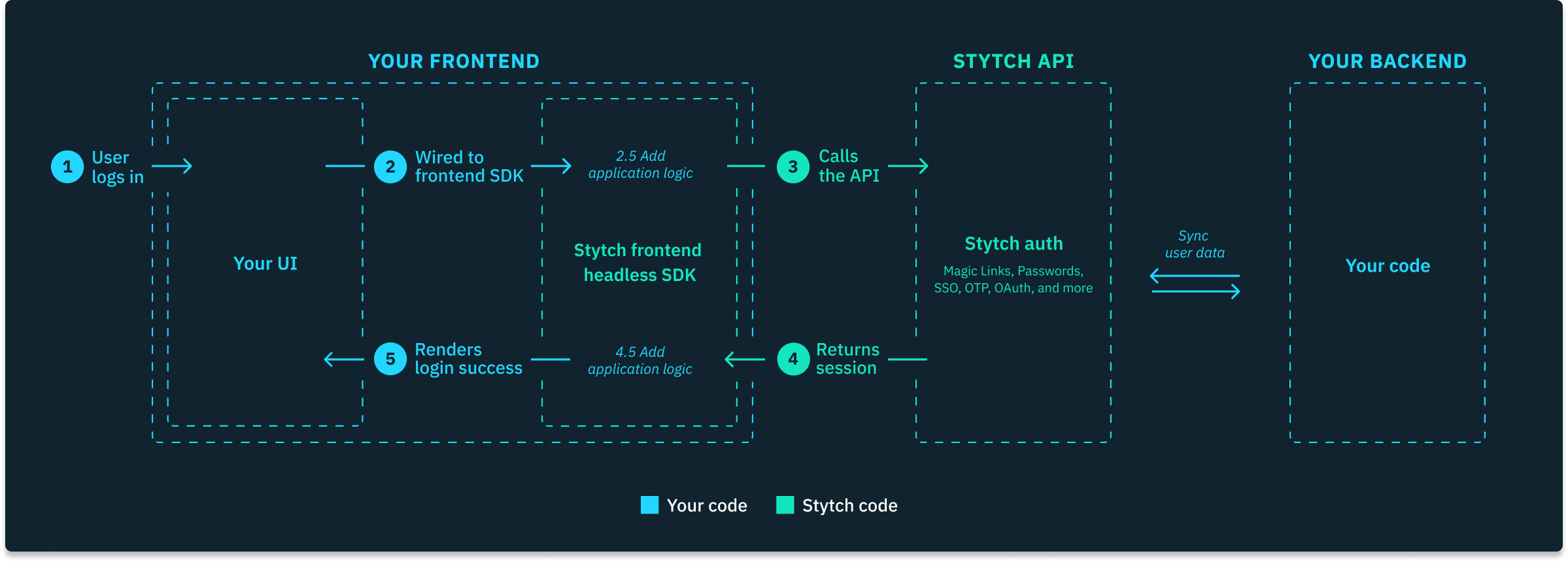
- The end user attempts to log into your application with your custom UI.
- Your frontend handles the UI events, collects all the necessary authentication data, and then utilizes Stytch’s frontend SDK methods to call the Stytch API to perform an auth-related operation.
- Stytch API processes the request and returns a response with pertinent data.
- Your frontend handles the response as needed, which may involve calling the Stytch API again, updating your UI, or relaying the data to your backend.
- Once the end user successfully authenticates, Stytch’s frontend SDK automatically manages the storage of session tokens using browser cookies or mobile storage.
Using the backend SDK or API
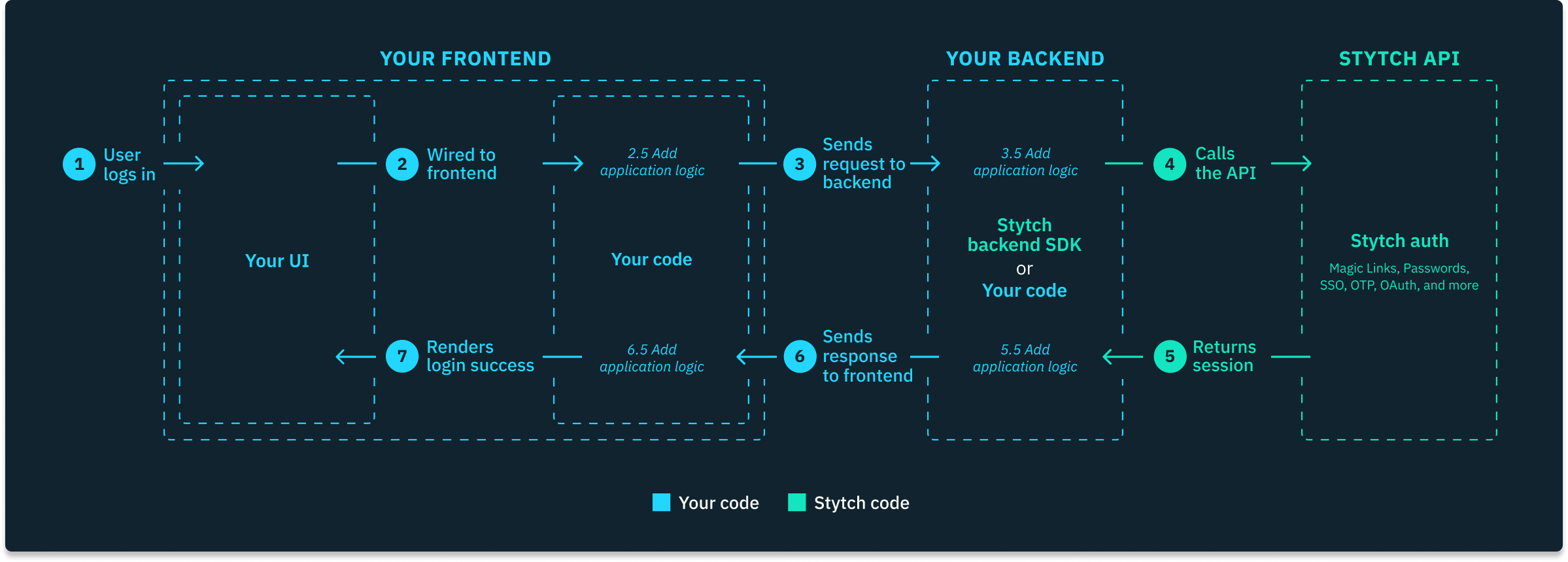
- Your backend collects all necessary authentication data (e.g., IDs, tokens, emails, and metadata) and calls the Stytch API to perform a specific auth related operation (e.g., initiate an auth flow, retrieve an organization or member record, and refresh a session).
- Stytch API processes the request and returns a response with pertinent data (e.g., minted session, organization data, auth metadata, and statuses).
- Your backend handles the response and transforms the data as needed, which may involve calling the Stytch API again, passing the data to a different backend or microservice, or relaying data back to your frontend.